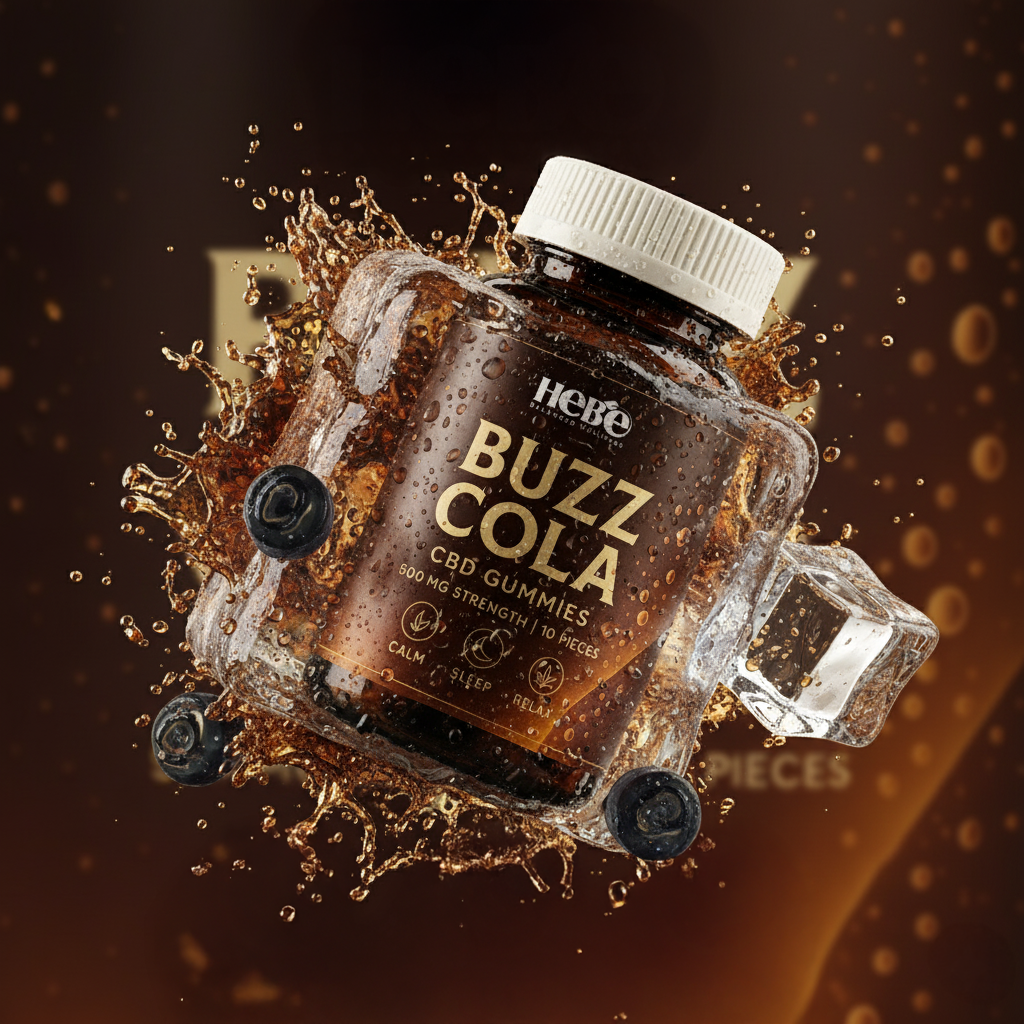
When reviewing a cannabis product label, you will find various types of data. Some examples are as follows:
- 10% THC
- 20 mg THC
- 50 mg/mL
- 500 mg Total THC
Initially, it is tempting to think of these pieces of information as different measures of strength for the product.
However, this is often not the case.
One piece of information may describe the strength of THC contained in the product per unit, another may describe the total quantity of THC contained in the product, etc.
Knowing the distinctions described above will help you decipher a cannabis or THC oil label.
So what does it mean to say that the THC content of a cannabis product is X %?
Let’s look at the details, keeping the math to a minimum.
What Does THC Potency Mean?
The term THC potency refers to the quantity of the psychoactive cannabinoid THC present in a cannabis product.
It is important to note that not all cannabinoids present in cannabis are psychoactive. For example, cannabidiol (CBD) is not psychoactive.
Generally speaking, the greater the THC content of a cannabis product, the greater the potential exposure to psychoactive effects.
However, it is important to note that the quantity of a product consumed will impact total psychoactive effect.
What is the Difference between THC Percentages and THC Milligrams?
In this article, this will be the most important distinction to understand.
- THC percentages express concentration.
- THC milligrams express amount.
- THC percentages tell us how much of a cannabis product is THC.
In an oil or edible product, THC milligrams tell us how much oil or edible contains THC.
Neither expresses an amount or concentration better than the other.
They just communicate different things.
What do THC Percentages Represent?
THC percentages represent the part of the product that THC occupies.
Because of this, a product that contains 10% THC can not be equally compared to a product that contains 20% THC.
In a simplified representation, the product that contains 20% THC can be considered twice as concentrated as the product that contains 10% THC.
However, this is not to say that effects of the product that contains 20% THC will be twice as strong as the product that contains 10% THC.
In truth, many other variables influence the kind and strength of effects that an individual will experience.
Do Products with a Higher THC Percentage Affect a Person More?
This is not necessarily true.
Products with higher THC percentages can increase the strength of the intoxication effects and can increase the likelihood of a consumer taking too much of the product.
Experience with a given cannabis product also depends on several personal factors including:
- Amount consumed
- How it is consumed
- Tolerance
- Metabolism
- Product combination
- Other substances consumed
The impacts of THC cannot be solely determined by the percentage of THC in the product. These percentages should be viewed as estimates, at best.
What does mg mean on a THC product?
mg means milligram.
THC products use milligrams to measure THC content.
However, there are other considerations.
For example, a product could have 10 mg of THC per...
Serving?
Package?
milliliter?
There are many possibilities.
Because of this, 500 mg on the label of a product does not necessarily mean a single serving contains 500 mg of THC. It may just mean that the entire package contains 500 mg.
What is total THC?
Total THC refers to the total THC content in a product.
Imagine an oil product that has 500 mg of total THC.
This means that the oil contains 500 mg of THC.
It does not mean that each individual serving or each individual milliliter contains 500 mg of THC.
Total THC refers to the total quantity of THC present in the complete product. For determination of the THC content of a specific volume or serving, additional calculations are required.
Understanding mg/mL is important for THC oils and other products where concentration is provided in this format.
THC oils can contain other ingredients that increase the total volume of the product. These other ingredients may not contain THC. THC oils can also be combined with other products that do not contain THC to increase the overall volume.
mg/mL provides a way to determine the quantity of THC in a product without first needing to know the total volume of the product. Total THC and THC per mL are related. As an example, imagine two hypothetical THC oil products.
- Product A has a total of 20 mL and total THC of 500 mg.
- Product B has a total of 20 mL and a total THC of 500 mg.
The two products have the same total THC, but product A is more concentrated. Concentration of a product is determined by dividing the total THC by the total volume of the product. Product A has a concentration of 50 mg/mL. Product B has a concentration of 25 mg/mL.
Total THC of a product does not always give an accurate representation of concentration. Products may also disclose the THC content on a per serving basis.
Total THC: 100 mg
10 servings
10 mg THC per servings
Let’s go over what the different components of a label mean.
100 mg- This represents the total amount of THC in the entire product.
10 servings- This is the manufacturer’s suggested serving size.
10 mg- This is the amount of THC in each serving.
When thinking about the amount of cannabinoids in a product, it is important to think about the unit of measurement, such as:
- Whole Unit
- Milliliter
- Serving
Being aware of these slight distinctions will help you understand cannabis and cannabis related product labels.
Understanding THC Oil Concentration
THC oils can be confusing because there can be varying degrees of concentration and methods of communication.
Here are some of the methods you may come across:
- Total Cannabinoids
- Total THC
- mg/ml
- Percentage
- Ratio
Each of these represent a different aspect of the oil.
Total THC represents the total amount of THC in the oil.
mg/ml represents the concentration of THC in each 1ml of oil.
A percentage represents the total amount of THC in the oil.
A ratio represents the amount of THC in comparison to the total amount of a 2nd cannabinoid.
Knowing these distinctions will help you decipher cannabis and related products.
What Is A Cannabinoid Ratio?
A ratio is another number you may see on cannabis products.
Ex: 1:1, 1:4, 1:10
In order to fully understand a ratio, you need to know the cannabinoids being represented and in which order.
Looking at ratios, ex: 1:4, we can understand that for every 1 part of a cannabinoid, the total amount of the other cannabinoid represented in the ratio will be 4 parts.
Keep in mind that a ratio will not provide you with the total amount of cannabinoids.
A ratio of 1:4 can describe products that don't resemble each other.
For example:
Product A may contain:
- 10 mg CBD
- 40 mg THC
Another product, B, may contain:
- 100 mg CBD
- 400 mg THC
Even though Product A and Product B have the same ratio of CBD to THC, the total amount of CBD and THC in the products is different.
So when interpreting ratios of CBD and THC in products, you must consider total amount of CBD and THC in the product.
Is 500 mg of CBD an Indicator of Product Strength?
It depends on several factors.
Many consumers of cannabis products assume that if a product contains 500 mg of CBD, THC, or total cannabinoids, that the product is strong.
This is not the case.
First you must determine, of the 500 mg, what is being referred to?
It may refer to:
- 500 mg of THC
- 500 mg of CBD
Total of 500 mg of all cannabinoids
Total of 500 mg of cannabis extract
500 mg of some other ingredient
Once you have identified the component being referred to, you must consider if 500 mg is the total amount in the product, or the amount in a single serving.
You must read and understand all information on a product label.
Just because a product contains a high amount of a single cannabinoid, it doesn't mean the product is very potent.
Potency and dose are often confused.
Potency discusses the amount of THC in a product.
Dose explains the amount of THC given or consumed.
Like the dose of caffeine in a cup of coffee, the potency can vary.
Measuring THC is slightly different than measuring other substances because of the role concentration plays.
A product can have a high concentration of THC and still contain a low total amount.
To determine total exposure to THC, it is necessary to know both the concentration and the volume consumed.
Example
Let's say you have two spray bottles, A and B. Each has 1000mg of total THC. Bottle A has 10mL of total solution and Bottle B has 30mL of solution.
- Bottle A has a THC concentration of 100mg/mL.
- Bottle B has a THC concentration of 33.3mg/mL.
Concentration can vary significantly between products with the same total THC.
For this reason, it is misleading to judge the strength of a cannabis product based solely on the total milligrams of THC the product contains.
What does High Potency mean?
Different jurisdictions may have differing definitions of high potency THC; however, in general, high potency THC products are products with a relatively high THC concentration.
Concentrates have a greater THC concentration compared to other forms of cannabis.
Higher THC concentrations increase the risk of overconsumption.
The true meaningful information that should be disclosed is the total THC of a product, how much is in one serving, and the concentration.
Numbers provide more information than general statements.
More THC does not always improve a product.
It doesn’t always mean:
- Being more effective
- Containing better ingredients
- Being more pure
- Being better made
- Being more appropriate for an individual
- Having been better evaluated
- Being more suited for a particular use
When assessing the quality of a cannabis product, consider other factors in addition to the cannabinoid profile.
Some examples might include:
- What ingredients are used in the product?
- Who manufactures the product?
- What information is included regarding batch and lot numbers?
- Has the product been tested by an independent laboratory?
- Is the label on the product accurate?
- How was the product stored and for how long?
Was the product packaged and labeled in accordance with local and state laws?
Just because a cannabis product has the highest number of THC among similar products doesn’t mean it’s the best product.
Why Is Laboratory Testing Important?
The information on a product label is useful only if the product corresponds to the information on the label.
Laboratory testing plays an important role in verifying information on product labels and regulating the cannabis industry.
Testing might help answer the following questions:
- Is a cannabinoid present in the product?
- How much of a particular cannabinoid is in the product?
- Is THC in the product?
- Are other cannabinoids in the product?
- Is a batch of the product consistent?
- Is the product free of harmful contaminants?
A product batch might also be evaluated by a third-party laboratory.
The laboratory testing document is useful only if it is pertinent to the product being evaluated.
We will discuss product labeling and COAs in more detail in our upcoming publication, How to Read a Cannabis Product Label and COA.
Why is Labeling Accurate Cannabinoid Information Important?
Because of labeling information, consumers might make product choices based on the amount of THC in the product.
Products that contain more THC than the label states are potentially dangerous and could lead to undesirable or unexpected symptoms of being high.
Maker of transparent products know the type of info that's useful to you is:
- Which cannabinoids are in the product
- How much of each is in the product
- If amounts are stated total or per portion
- The volume of the product
- How much to take
- Which batch it is
- What testing has been done on the product
A product label should give information and answer a user’s question rather leave the user with an information gap.
Can 2 Products with the Same Amount of THC Be Different?
Yes
The point being THC potency is not a guarantee of the type of high, if any, a user may experience.
It’s important to know that the stated THC potency, the route of administration, the type of product, the user’s body mass, previous exposure to THC and other substances all play a role in how the user perceives the effects of THC.
It’s important to consider all variables when stating why an individual user does or does not feel the effects of THC.
Concentrated products require a clear understanding of label terminology.
THC is measured in many ways. With respect to dosage, higher THC means higher risk of overconsumption.
Many people mistakenly believe that a small product contains a small dose of THC.
This is not the case.
A small, highly concentrated product may contain more THC than a larger product.
With respect to dose, it is better to look at the THC percentage than the mg/mL.
This is because mg/mL varies product to product and can be misleading.
For products other than liquid THC, percentage may be a better indicator of dose.
For products that are divided into doses, the dose may be represented in mg.
The most important thing is to understand the terminology.
This will aid you in interpreting label information.
The following information will help you determine THC potency.
1. Determine the Cannabinoid
Is the number referring to THC specifically?
Or are other cannabinoids (such as CBD) or extracts being referenced as well?
2. Determine the Unit
Is the quantity expressed as:
- Percent
- mg
- mg/mL
- mg (or other quantity) per serving
3. Consider the Total Quantity of the Product
What is the quantity (in mL) of oil in the container?
How many individual serving units (e.g. gummies) does the package contain?
4. Consider the Individual Serving
Does the individual serving unit (e.g. gummy) contain THC and/or other cannabinoids? If so, is the quantity expressed in mg?
5. Consider the Cannabinoid Ratio
What do the numerator and denominator represent?
6. Consider Batch/Test Info
Does the product label or documentation provide batch information and/or testing information?
Once you have answered these questions, understanding potency information becomes simpler.
Example of Simple THC Labeling
Say a product labels the following information:
- Bottle Size: 10mL
- Total THC: 500mg
- THC Concentration: 50mg/mL
- CBD Ratio: 1:5
What is the total THC content of the product?
Each mL contains 50mg THC.
And the ratio expresses that CBD is present at less than 20% of the total THC (i.e. CBD is at 1 part for every 5 parts THC).
THC Labeling Inconsistencies
Inconsistency 1: Thinking Total Management = Management per Serving
Just because a product label states “Total THC” as 1000mg, does not mean each individual serving (e.g. gummy) contains 1000mg THC.
You need to be aware of different bottle sizes when considering concentrations.
Knowing relative proportions does not provide doses.
A 1:4 ratio simply means that for every 4 parts of one cannabinoid, there is 1 part of the other cannabinoid.
There are many factors that impact a user experience, and sometimes, even a small difference in concentration can drastically change user experience.
Potency does not always equal quality.
A product can contain very little cannabinoids and still yield poor quality.
"Front of the box" labeling provides the least amount of information.
Most packaging and/or product information describes the potential risks and harmful effects of the product.
Frequently Asked Questions
THC Potency is the quantity of THC included in a cannabis product.
THC is expressed as a percentage by weight.
The term mg in the context of cannabis means milligrams.
mg/mL signifies the concentration of THC in solution and provides the amount of THC per milliliter.
How much THC is in 500 mg?
It depends on the specific product. 500 mg could represent the total THC content in the entire product, or it could represent a sub-division of the product. In addition, there are other factors including the total volume of the product and the other ingredients that could impact how 500 mg of THC is represented.
Is the percentage of THC equivalent to the dose of THC?
No. A dose of THC is how much THC is given or consumed. The percentage of THC is how concentrated THC is in a product.
Is more THC more effective?
It may, but there are other variables at play. Some of these may include how much is consumed, what the method of delivery is, and what other experience is with THC.
What does 1:1 THC mean?
This is referred to as a “ratio.” When a ratio is stated, it does not mean equal total THC and total CBD.
What does 1:4 CBD mean?
This means CBD is less than THC, and for every 1 part of CBD, there is 4 parts of THC.
Is it better to have a THC product with a higher concentration?
Not necessarily. A product with a higher concentration may not be of better quality or safety.
Can that 1:1 ratio of THC and CBD mean the total amount of both is 1 mg?
Total THC could be 1 mg and total CBD could be 1 mg.
Why is THC potency important?
Potency helps people understand how much THC a product contains and makes it easier to compare products when the measurements are presented clearly and consistently.
Final Thoughts
Understanding THC potency becomes much easier once you stop treating every number on a cannabis label as the same thing.
Remember these four basic concepts:
Percentage = concentration
mg = amount
mg/mL = amount per volume
Ratio = relative proportion between specified cannabinoids
Then ask one more question:
Does this number refer to the entire product or one serving?
Those simple distinctions can completely change how you interpret a cannabis product label.
A bottle containing 500 mg THC isn't necessarily equivalent to another bottle containing 500 mg THC if their volumes differ.
A 1:4 cannabinoid ratio doesn't tell you the total amount of either cannabinoid.
And a higher THC percentage doesn't automatically mean a product is higher quality or more appropriate for a particular person.
Potency is important information.
But it's only useful when you understand what is being measured, how it is expressed and what the number actually refers to.
Disclaimer
This article is for educational and informational purposes only and should not be considered medical advice. THC and cannabis products may cause impairment, unwanted effects and interactions with medications or other substances. Product composition and labeling requirements may vary by jurisdiction. Consult a qualified healthcare professional before using THC-containing products, particularly if you have a medical condition, take medication, or are pregnant or breastfeeding.